KhabarOnline’s Interview with Daal Band
September 5, 2016
By Samaneh Farahani
Their album has appeared on the best-selling lists of music retailers and, according to the band, has become the year’s best-selling fusion album. Their songs have been heard across social media, in cafés, on the radio, and even on television. Anyone who has listened to Khandeh-haye Yaar (The Beloved’s Laughter) may have wished to sit face-to-face with them, even for a moment.
The members of Daal Band have been friends for years. They describe the continuation of this friendship among five people as one of their most significant achievements. Through all the difficulties along the way, they have stayed together and eventually released their debut album, Walk of Ordibehesht.
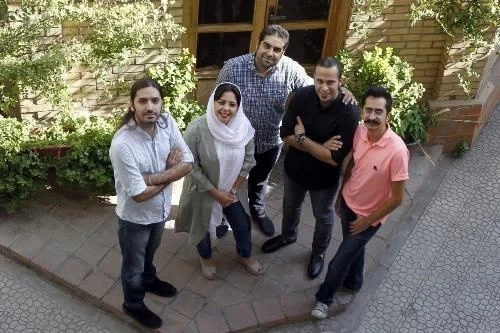
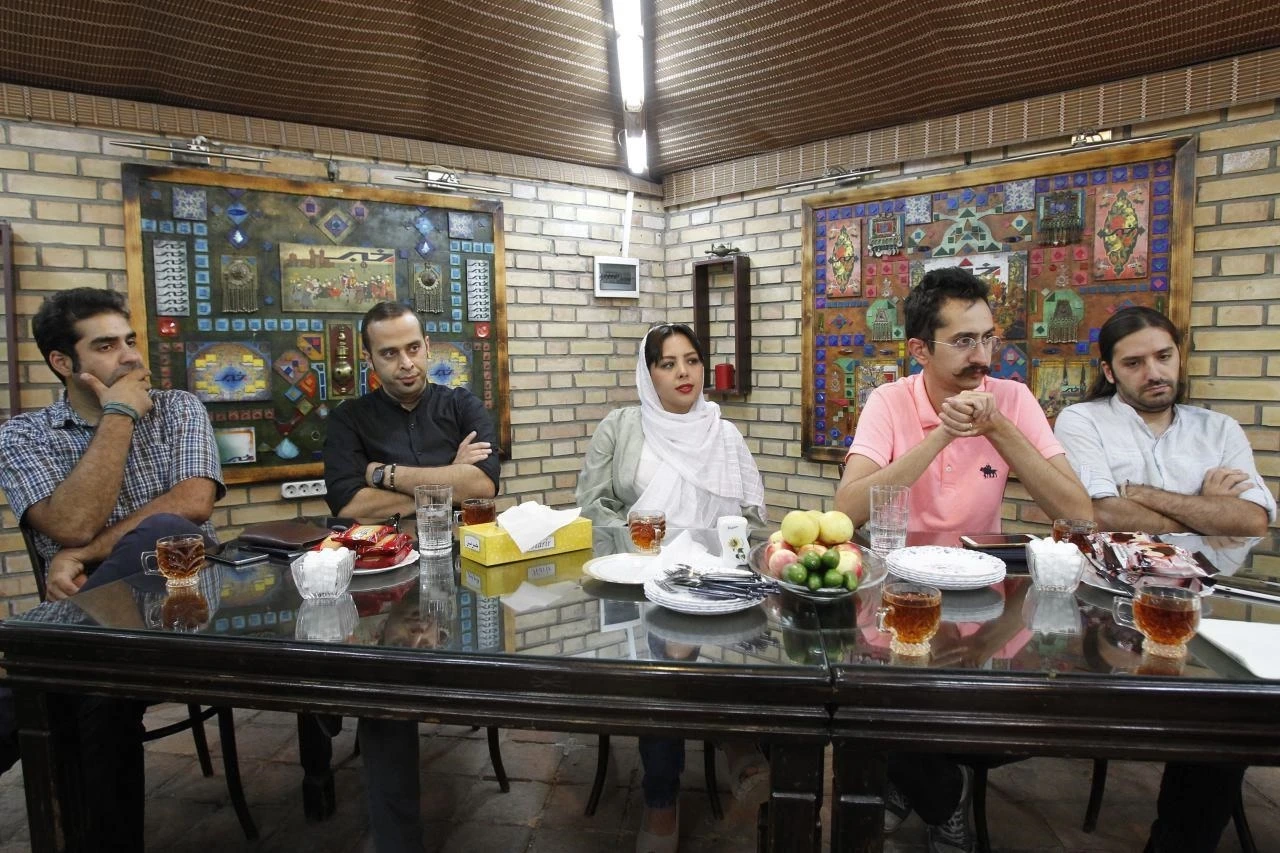
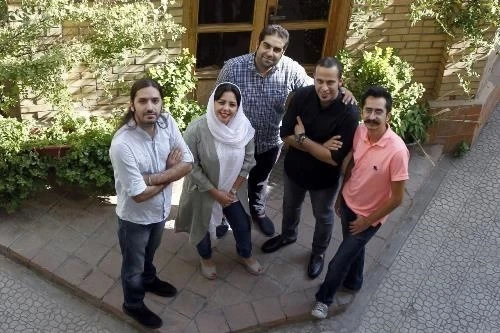
Shayan Shekarabi, Ghazal Mahdavi, Yazdan Bahmani, Amin Hedayati, and Milad Saadi are now preparing for their first concert at Tehran’s Vahdat Hall. A few days before the performance, they joined us at Khabar Café to speak about their journey, the creation of Walk of Ordibehesht, and the future of Daal Band.
The music video for “The Sweet Taste of a Dream” was screened during the interview.
Most of you have studied traditional Iranian music. Why did you ultimately choose fusion-pop rather than traditional music?
Shayan Shekarabi: I began learning the piano through Iranian music. At first, I played only Iranian pieces, but I never thought of myself exclusively as an “Iranian pianist,” nor did I feel obliged to remain within a single musical framework. Our tastes naturally change over time. I have never been dogmatic about music, and the same is true of the other members of Daal.
Each of us listens to different genres, and all these influences come together in our work. The music we create is the result of the combination of our individual tastes and experiences.
Ghazal Mahdavi: We belong to the same generation as much of our audience. We did not choose this musical language merely to satisfy listeners. We are children of our time, and our tastes have changed alongside the tastes of our generation.
Was fusion music a deliberate choice based on what audiences wanted?
Yazdan Bahmani: Sometimes decisions emerge naturally rather than through a calculated process. A group of friends spend time together, listen to music, exchange ideas, and gradually something begins to take shape.
We did not want to remain within the conventional framework of traditional music. At the same time, audience tastes were changing, and we were flexible enough to move with those changes. These two developments happened alongside each other.
Milad Saadi: There is no single, fixed definition of fusion music. We see our work as experimental music, which may also fall under the broad category of fusion. Other bands described as fusion may sound completely different from us. We wanted to expand what we had learned and incorporate it into the kind of music we were searching for.
How important was social media in introducing Daal Band?
Shayan Shekarabi: In the final months of 1392—early 2014—we released Dancing my Song online. We did it out of love for the music, without planning a particular promotional strategy or expecting a specific response.
At the time, the available opportunities were limited, and the internet was one of the few ways we could share our work. The response exceeded our expectations. If our primary goal had simply been to attract the largest possible audience, we probably would have produced mainstream pop music.
After that, we released Walk of Ordibehesht and I Await the Moments. We remained active online, and after several years of work, we finally released our first album.
So audiences already knew Daal before the album was released.
Yazdan Bahmani: Social media today plays a role similar to the one radio once played. It allows young artists to reach audiences more easily. This accessibility can also improve quality by creating healthy competition. The emergence of new works and new voices is a blessing.
Shayan Shekarabi: When everyone has access to the same platforms, artists have to work harder to capture the audience’s attention. That can ultimately lead to better-quality work.
Yet an illegal download link for the album appeared less than twenty-four hours after its release.
Shayan Shekarabi: This is partly a cultural problem and partly a legal one. The entire album was uploaded to Radio Javan for free download without our permission. It is not something that can be solved completely or overnight. The culture surrounding music consumption needs to improve.
Still, we are deeply grateful to the listeners who supported us by purchasing the album legally. We never expected our debut release to become the year’s best-selling fusion album.
Did the album’s sales exceed your expectations?
Shayan Shekarabi: Yes, absolutely. The album reached its third pressing. That success was the result of the group’s collective effort, the support of the people who bought the album, and the work of Javan Records, which handled its publication and distribution.
In Daal’s creative process, do the lyrics come first or the music?
Ghazal Mahdavi: The final quality of the work is more important to us than following a fixed formula. We discuss our ideas together, but we do not insist on a rigid process.
For most of the tracks on this album, the music came first and the lyrics were written afterward. Personally, I prefer this approach. It can also be found in Iranian traditional and popular music from the 1950s and 1960s. When the music takes priority, I often feel the lyrics can achieve a stronger result.
That does not mean we will always work this way. In future projects, the lyrics may come first. We do not want to impose unnecessary limitations on ourselves. What matters is reaching the best possible result. In many cases, the melody and the words also evolve alongside one another.
How would you define the identity of Daal Band?
Amin Hedayati: For me, Daal is another name for friendship. The core of the band grew out of friendships that go back more than ten years. We stayed beside one another through difficult times. No one recruited the others into the band; the group formed naturally through friendship.
Our individual positions within the band have always been secondary to that friendship.
Shayan Shekarabi: Working as a group is difficult and requires proper management. We have spent nearly three years learning how to work together. We have learned to separate personal matters from professional ones and to respect one another’s opinions.
The culture of teamwork is not particularly strong in Iran, but I believe we have made meaningful progress.
Amin Hedayati: We also have very different musical tastes. Learning to respect those differences has been essential.
Walk of Ordibehesht has a notably hopeful atmosphere. Was that optimism intentional?
Yazdan Bahmani: It was not the result of a calculated decision. Artistic concerns often emerge naturally. Through our conversations and shared experiences, the album gradually took the form it has today.
We did not want to create passive or despairing music. There are already many sorrowful works around us, and we wanted our music to carry some hope. Of course, art should not dictate a message to its audience. We are simply happy that listeners have felt a sense of hope and vitality in the album.
Will that hopeful atmosphere continue in your future work?
Shayan Shekarabi: Our upcoming single has a similar atmosphere, but we cannot yet say what the next album will sound like. We have held several meetings and discussed different musical combinations, but nothing has been finalized.
Yazdan Bahmani: The process of creating music often reveals its own direction. We do not want to restrict ourselves in advance. The path itself will eventually define the album.
Why have you not added new permanent members to the band?
Yazdan Bahmani: The core members are involved in every aspect of the group, whether large or small. We cannot necessarily expect guest musicians to deal with all the challenges that the main members face.
Because the project was independently produced and financed, we were involved in everything—even areas such as graphic design and visual identity. Under those circumstances, adding permanent members did not necessarily seem like the right decision.
Will you continue releasing singles?
Shayan Shekarabi: Releasing singles has become common around the world. Music is now much more accessible, and audiences expect artists to release new material more frequently.
Will the new single be performed at your concert?
Shayan Shekarabi: Yes. We will perform it alongside the tracks from Walk of Ordibehesht. This will be the first time the new piece is performed live.
Amin, what did your teachers, Alireza Ghorbani and Mohammad Motamedi, think of your work with Daal?
Amin Hedayati: Mr. Ghorbani gave us a great deal of moral support, and I am very grateful to both him and Mr. Motamedi.
Milad, will the concert on 27 Shahrivar feature a special stage presentation, or will the musicians remain more in the background?
Milad Saadi: We have developed several ideas, and the performance will be different from our appearance at the Fusion Music Festival. We would prefer to keep the details as a surprise.
In some pop concerts, musicians are asked to pose or place several instruments onstage even when those instruments are not actually being used. I believe what matters is that the emotion be genuine. This is our first major concert, and we want everything the audience sees and hears to feel real.
Shayan Shekarabi: Stage presentation is also subjective. Some audience members may want to see a particular instrument or musician more clearly.
Amin Hedayati: Our main focus is to enjoy performing the music. When the feeling is genuine, it reaches the audience.
Some of your recognition came from music used in films and television productions. How influential was that exposure?
Shayan Shekarabi: Any form of exposure can help introduce a band to a wider audience. However, this is not something I focus on or feel qualified to comment on in detail. It is largely a matter for producers and production teams.
Did Daal have a producer?
Shayan Shekarabi: Our first album was independently produced and financed by the band. We are now working with a strong professional team, including Mr. Roghani and Mr. Razavi, who manage the group.
Yazdan Bahmani: We have always tried to preserve our red lines. Those principles may evolve over time, but the music itself is one of our main red lines. We need to remain independent in creating and producing it.
At the same time, working professionally requires collaboration with people who have expertise in areas beyond the music itself.
Ghazal, you once compared the band to ghormeh sabzi—a dish that needs time to develop its full flavor. Do you think Daal has now reached that stage?
Ghazal Mahdavi: There is no precise measure of artistic maturity. Based on our initial expectations, I believe we are in the right place. But I do not think an artist ever reaches a point of complete maturity, because art has no end.
We are pleased with the audience’s response to the album and our concerts. It shows that the path we chose has worked so far. But there is still a long way ahead of us, and there are no guarantees. To maintain success, production and management must be approached with great care.
Does the existence of other bands with similar names bother you?
Shayan Shekarabi: Not as long as it does not harm our work.
Milad Saadi: It reminds me of Maxell cassette tapes. At one point, a Chinese product called “Maxwell” appeared, and some people bought it because the name resembled a familiar brand. Ultimately, everyone is free to do their own work.
Ghazal Mahdavi: Successful trends are often imitated. In the end, the audience decides which work is genuine and worth following.
Yazdan Bahmani: We prefer to remain focused on our own path.
Your concert sold out. Why was an additional performance not scheduled?
Yazdan Bahmani: That is related to management decisions and the group’s long-term strategy, which falls outside our own field of expertise. We trust our management team, and we believe better opportunities are ahead.